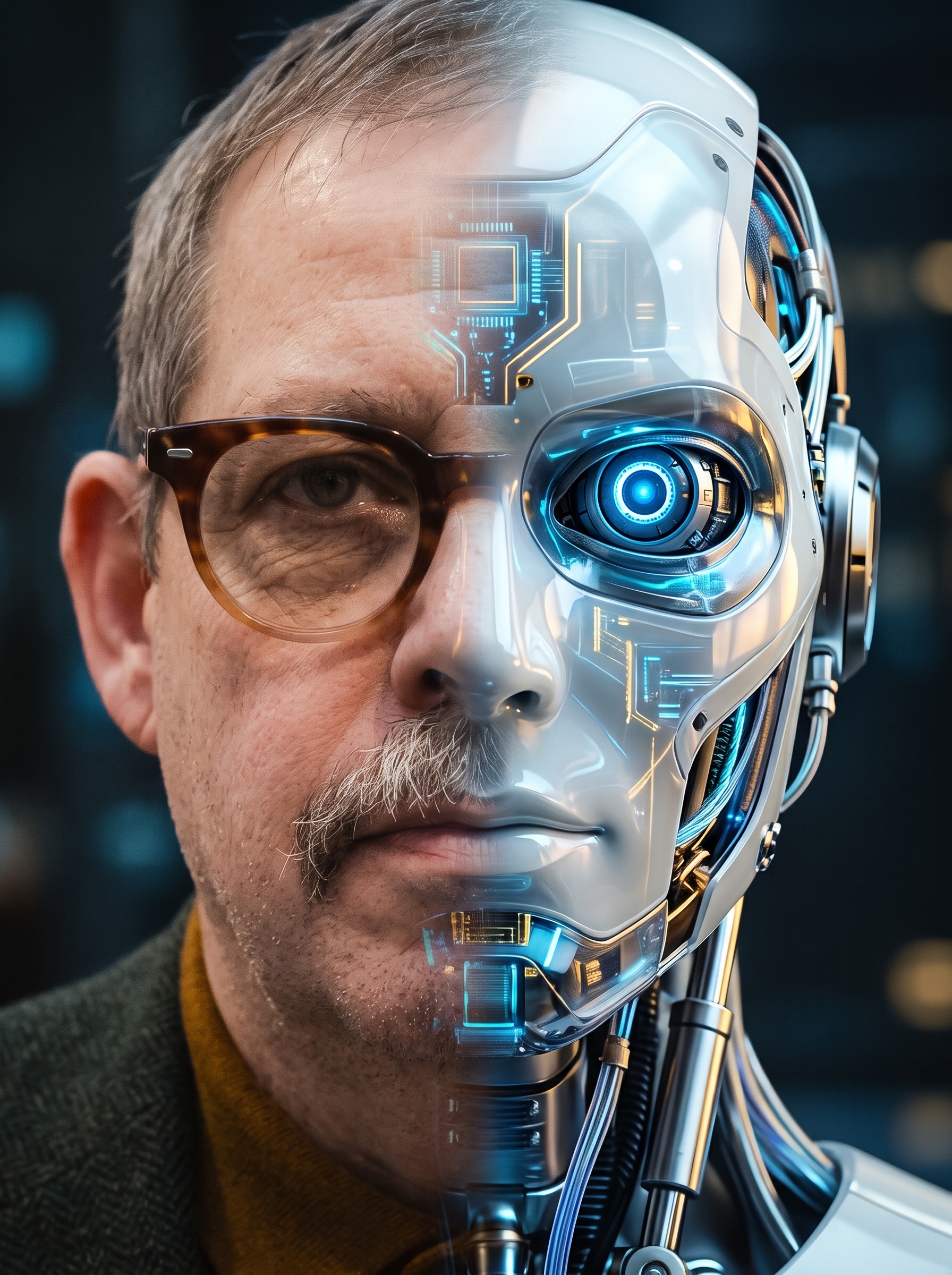
AI can do more for us every month.
It can answer questions, write emails, recommend products, generate ideas, organise information and help businesses move faster.
But the more efficient life becomes, the more valuable genuine human interaction may become too.
Tailoring is a good example.
A made-to-measure consultation is obviously about the garment. We measure, choose cloth, discuss proportion, decide on styling and work towards the best possible fit.
But that is only part of what happens.
People Talk
People talk.
They tell us where they are going, what they are celebrating, how they feel about clothes, what makes them comfortable and sometimes what does not.
A conversation that starts with a jacket can move through weddings, work, confidence, travel, family and life.
That human element is not an inefficiency. It is part of the reason the tailoring is better.
Two people can have the same chest, waist and inside-leg measurements and still need very different garments. Posture matters. Shoulder balance matters. Movement matters.
So does personality.
A client may say they want something plain because they do not like standing out, only to discover that they love texture or colour once it is introduced in the right way. A good consultation is as much about listening as measuring.
The better we understand the person, the better we can make the garment.
Human Contact in a World Designed Around Speed
That feels increasingly important in a world designed around speed.
Self-checkouts, apps, online banking, digital customer service and automated systems are all convenient. Much of that convenience is genuinely welcome.
But removing friction is not the same as removing human contact. A tailoring appointment is deliberately unhurried. You sit down. You talk. You consider things together. There is time to change your mind, explore an idea, ask questions or simply have a conversation.
For people who spend much of their day working remotely or dealing with screens, those moments of face-to-face interaction can become surprisingly rare.
I am not suggesting a tailoring consultation is therapy. It is not.
But ordinary human connection matters. Clothing itself can be deeply personal too.
People remember what they wore when they married, started a new job, attended an important event or reached a significant moment in their life.
Sometimes a new suit is simply a new suit. Sometimes it represents change.
Someone may have gained weight, lost weight, become older, changed careers or reached a point where the clothes they used to wear no longer feel like them. A good tailor does not need to judge any of that.
The job is to understand the person standing in front of them now and create something that works for them. There is something quietly powerful about wearing a garment designed around your body instead of feeling that your body has somehow failed to fit the clothes.
Tailoring Has Always Been Built on Relationships
Tailoring has always been built on relationships.
When a client returns, the conversation does not start from zero. We remember how they like their trousers, the cloths they prefer, what they dislike and how previous garments worked for them. Over time, tailoring becomes more personal than a transaction.
AI will absolutely become part of more businesses, including ours. It can improve systems, help organise information and make businesses more efficient.
That is useful, but efficiency and connection are not the same thing.
An algorithm can suggest a colour. A tailor can notice the expression on your face when a particular cloth is placed in front of you.
A system can record a measurement. A person can notice that you keep tugging at the sleeve of the jacket you arrived wearing and ask why.
Technology can process information extraordinarily well.
Human beings understand each other through far more than information.
Perhaps Luxury Is Becoming Time
Perhaps one of the new luxuries is simply time. Time to ask a question, time to consider something properly, and time spent with someone who is paying attention to you.
Choosing cloth together, discussing ideas, trying something unexpected, sharing a coffee or a whisky and having a conversation are not inefficiencies that technology needs to remove.
They are part of the experience.
As AI becomes more capable, perhaps the question should not only be:
What can technology replace?
Perhaps we should also be asking:
What is worth preserving?
For us, one of those things is the simple act of sitting down with another person, listening properly and creating something specifically for them.
The suit may be the reason for the appointment, but the human connection is part of what makes it tailoring.